

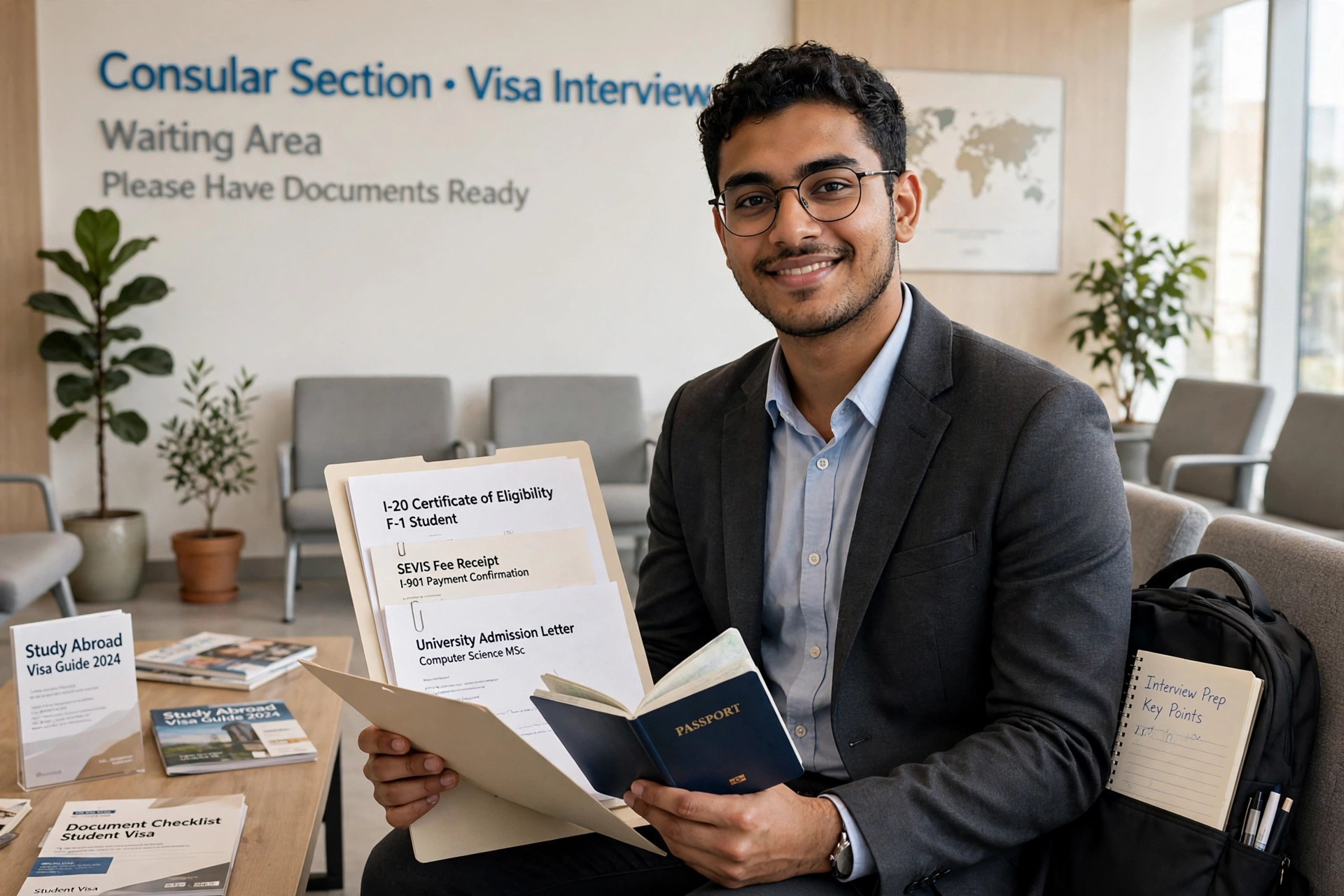
For many international students, the visa interview feels like the final exam of the whole application process — a short conversation on which years of planning appear to depend. In reality, consular officers are not looking for perfect speeches. They are looking for clear, consistent answers that show a genuine study plan, honest finances and credible ties to life after graduation. With application volumes high again this season, preparation matters more than performance, and the students who do best are usually the ones who treat the interview as a documentation exercise, not a drama.
What Officers Are Actually Assessing
Student visa law in the United States and most other major destinations rests on a simple idea: the applicant must be a bona fide student entering for a genuine course of study, with the means to pay for it and an intention to comply with the terms of the visa. The U.S. Department of State’s student visa guidance sets out the core requirements — acceptance by an approved school, sufficient funds, and preparation for the course — and officers test those points through conversation rather than paperwork alone.
That is why short, direct answers work better than rehearsed paragraphs. When an officer asks why you chose a particular university, they want your real reasons: a specific programme, a research group, a curriculum that fits your background. Vague answers about a country’s lifestyle or a city’s fame invite follow-up questions, because they do not connect the course to your own academic story.
Documents That Support — Not Replace — Your Answers
Bring a clean, organised file: your passport, offer and enrolment documents, financial evidence covering tuition and living costs, academic transcripts and test scores, and any scholarship letters. Officers may not ask to see most of it, but documents that match what you say build confidence quickly. Inconsistencies do the opposite — a funding figure in your forms that differs from your bank statements, or a course start date you cannot recall, will slow the interview down.
Financial evidence deserves special care. Show stable, traceable funds in the sponsor’s name, be ready to explain your sponsor’s occupation and income in one or two sentences, and avoid large, unexplained deposits made just before the interview. If your funding combines savings, a loan and a scholarship, practise explaining that mix simply. The EducationUSA network offers free, official advising in many countries and is a sound place to sanity-check both your documents and your expectations before the appointment.
Questions You Should Practise Out Loud
Most interviews circle the same ground: why this country, why this university, why this course, how it connects to your previous studies, who is paying, and what you plan to do afterwards. Practise answering each in under a minute, in your own words, without memorising a script. If your academic path involves a change of field, prepare the bridge sentence that explains it — what you studied before, what changed, and how the new course follows logically. Career plans should be specific and realistic; naming the sector, the type of role and the employers or institutions at home that hire for it is far stronger than a generic promise to “get a good job.”
Honesty about previous applications also matters. A past refusal is not automatically fatal, but officers can see your history, and an application that quietly contradicts an earlier one creates problems that a straightforward explanation would have avoided. If your circumstances have genuinely changed — new funding, a stronger offer, completed prerequisites — be ready to say exactly what is different this time.
On the Day: Small Habits That Help
Arrive early, dress neatly, keep your phone away, and answer the question that was asked rather than the one you prepared for. If you do not understand a question, it is entirely acceptable to ask for it to be repeated; guessing produces the rambling answers officers distrust. Speak at a natural pace, make eye contact, and do not volunteer long detours into family history or future migration plans that were not requested. Students comparing destinations may also find it useful to read how work-focused routes differ, in our overview of digital nomad visas in 2026, since keeping study and work routes clearly separate is part of presenting a credible plan.
After the Interview
Whatever the outcome, note down the questions you were asked while they are fresh. An approval usually means your passport is retained for visa printing; a refusal normally comes with a written explanation of the legal basis, and that wording is the key to any stronger future application. Resist the urge to reapply immediately with identical evidence. Address the stated reason first — stronger financial documentation, a clearer study plan, or a better-matched course — and the second conversation starts from a different place. Prepared properly, the interview stops being a lottery and becomes what it was designed to be: a short, fair check that a real student is ready to study.

