

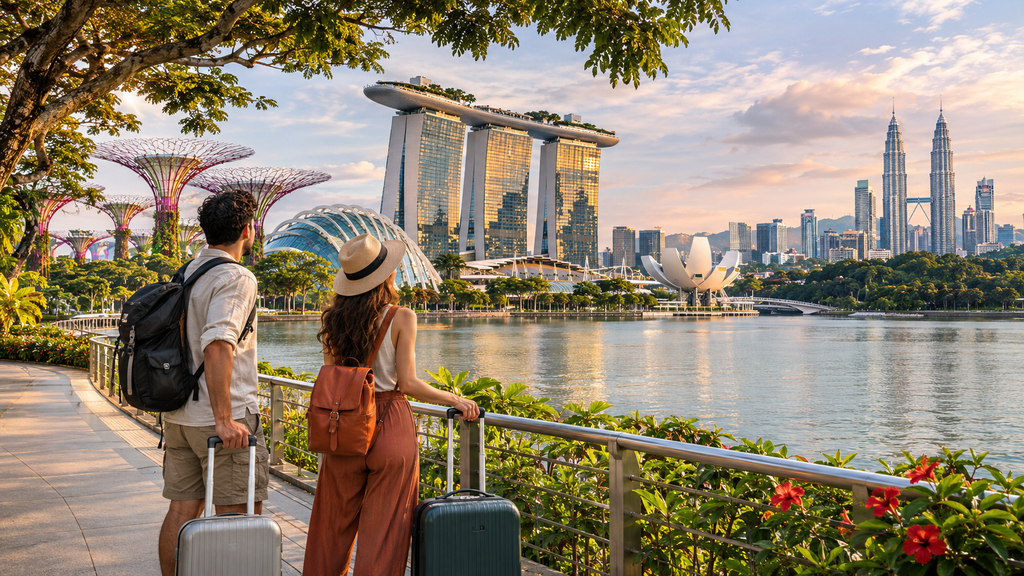
If you have spent time exploring Central America, you already know that the most memorable trips are rarely the ones with the longest list of stops. A lively market, a dramatic landscape and a good meal can tell you more about a place than racing between five cities in one week. That lesson travels surprisingly well to Southeast Asia.
For travellers considering their first long-haul trip to the region, Malaysia and Singapore make a practical pairing. They offer different rhythms, a broad range of food and well-known cultural and natural sights without requiring a new international flight every other day. A little destination research helps narrow down the options; this guide to places to visit in Malaysia is one way to see how different a capital city, an island and a heritage town can feel within the same country.
Why these two countries work together
Malaysia rewards travellers who enjoy moving between neighborhoods, markets, landscapes and local food stops. Kuala Lumpur has major urban landmarks, but it is also full of places where the best plan is simply to walk, taste something new and look around. Beyond the capital, Langkawi offers beaches and mountain scenery, while Penang is especially appealing to people who travel for food and heritage streets.
Singapore is more compact. Public transport connects many of the main districts, and a short stay can include impressive architecture, gardens, museums and neighborhood walks. It is tempting to think of Singapore only as an expensive stopover, but plenty of rewarding activities, from waterfront walks to cultural districts, do not require a paid ticket.
The two destinations are different enough to keep the trip interesting, yet manageable enough to plan without an exhausting daily transfer. For anyone building a Southeast Asia itinerary for first timers, that balance matters more than collecting extra passport stamps.
A realistic nine-day route
A nine-day Malaysia and Singapore itinerary can follow a simple pattern, with no more than one main outing on most days.
Days 1 to 3: Kuala Lumpur. Use the first day to recover from the flight and explore around your hotel. On the second, see a little of the historic city, perhaps around Merdeka Square, Central Market and Chinatown. Make day three a choice between a major attraction and a slower cultural outing. Batu Caves is popular, but the steep staircase and heat deserve preparation.
Days 4 and 5: Langkawi or Penang. Pick one, not both. Langkawi is suited to beach time, mountain views and a slower pace. Penang is better for people who want to spend their days walking heritage streets and sampling local dishes. Flying between destinations can save time, but make allowances for airport transfers and schedule changes.
Days 6 to 9: Singapore. Travel to Singapore and spend an easy first evening near your hotel. Dedicate the next day to Chinatown, Kampong Glam or Little India, choosing two neighborhoods rather than all three if you enjoy stopping for meals and museums. Reserve another day for Marina Bay and Gardens by the Bay. Keep the final day flexible for a museum, Sentosa or airport time before departure.
A three-day Singapore itinerary can help you select the landmarks and neighborhoods that matter most. It is better to borrow a few ideas from a guide than to treat every suggested stop as compulsory.
Think about the journey before the attractions
If you are starting in Guatemala or elsewhere in Central America, the long-haul journey will probably involve connections and substantial time-zone changes. Compare the entire route, not only the headline airfare. A cheaper flight with two awkward overnight connections may cost more once you add hotels, meals and the loss of a holiday day.
Check entry rules for your actual passport and route. Visa requirements, onward-travel documentation and transit rules differ by nationality, and they can change. Do not rely on a forum post written for someone with a different passport. Use the relevant official immigration and airline guidance before paying for non-refundable arrangements.
Travel insurance matters on a multi-leg journey, especially if several flights or independently booked hotels are involved. Keep digital copies of essential documents and an offline record of your accommodation address. A phone with reliable data is useful for maps, transport and translation.
Expect familiar heat, but not identical travel habits
Visitors who know tropical Central America may feel comfortable with the idea of humid days and sudden rain. Still, Southeast Asia has its own weather patterns, and conditions vary across Malaysia’s regions and through the year. Look up the forecast for each specific destination, not a single broad ‘Asia weather’ prediction.
Local etiquette is also worth learning. Dress respectfully at places of worship, follow posted rules about photography and shoes, and pay attention to whether a religious site is actively being used. In busy markets, ask before photographing individual stallholders. Small courtesies are a better travel tool than memorising an endless list of dos and don’ts.
Spend where the experience is distinctive
You do not need to buy your way through the whole trip. Balance paid experiences with food markets, street walks, public gardens and relaxed time between neighborhoods. In Singapore, for example, you might choose one ticketed museum or conservatory and spend the rest of the day enjoying Marina Bay’s public spaces.
Before selecting a paid outing, compare the practical details rather than just the photos. Look at opening days, entry times, age restrictions and the distance from your hotel. The range of Singapore attractions and experiences gives a useful overview of what could fit into a short visit, but a smaller number of well-chosen activities usually makes a stronger trip.
Travelling from one region of the world to another is about discovering differences, not proving how many countries you can fit on a map. Give Malaysia and Singapore enough time to feel like places you have visited, not airports you have passed through.
