

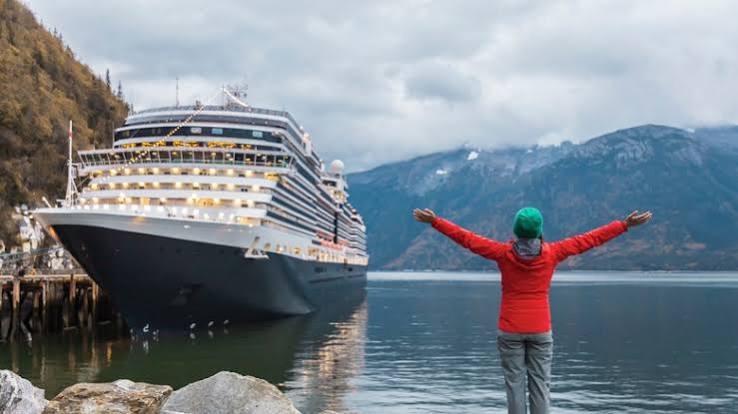
Alaska occupies an unusual place in the cruise world. While many cruise destinations are associated with warm beaches, resort towns, and tropical weather, Alaska attracts travelers for almost the opposite reasons. People come to see enormous glaciers, forested islands, snow-covered mountains, wildlife, historic communities, and stretches of coastline that still feel remarkably wild. Even the hours spent sailing between ports can become some of the most memorable parts of the vacation.
That combination helps explain why Alaska consistently ranks among North America’s most popular cruise destinations. According to Cruise Lines International Association data, roughly 1.7 million cruise passengers visited Alaska in 2024. For many travelers, the appeal goes beyond checking another destination off a list. Alaska offers the chance to experience dramatic scenery from the comfort of a modern ship while also stepping ashore to explore communities and landscapes that would be considerably more complicated to visit individually.
The Scenery Is Part of the Entire Journey
One of the biggest differences between an Alaska cruise and many other itineraries is that passengers do not necessarily have to wait until the ship reaches port to feel as though they are exploring the destination. Much of the experience happens while sailing.
Ships travel through waterways surrounded by mountains, forests, islands, and rugged coastlines. Depending on the itinerary, passengers may spend time near impressive glaciers or cruise through scenic passages where the view changes continually. A quiet breakfast beside a window can unexpectedly become a sightseeing experience.
Glaciers are particularly memorable because their scale can be difficult to understand through photographs. Seeing a massive wall of ice stretching across a landscape provides a very different sense of perspective. Some itineraries include scenic cruising near places such as Glacier Bay National Park, Hubbard Glacier, or other glacier regions, although exact routes vary by cruise line and sailing.
Something is appealing about being able to experience this scenery while enjoying the comfort of a ship. Travelers can spend time outdoors watching the coastline and then step inside for a warm meal, entertainment, or a comfortable place to relax.
Wildlife Adds an Element of Surprise
Wildlife is another major reason people become enthusiastic about Alaska cruising. The region supports whales, sea lions, seals, bald eagles, bears, and many other species, although sightings can never be guaranteed.
Whale-watching excursions are especially popular in ports such as Juneau. Other excursions take visitors into forests, along rivers, or through coastal areas where they may have opportunities to observe animals in natural environments.
Even passengers who do not book wildlife-focused excursions may find themselves scanning the water from their balconies or outdoor decks. Spotting a whale in the distance or seeing an eagle while approaching port can become an unexpected highlight.
That unpredictability adds something special to the experience. A traveler might have a carefully planned itinerary, yet one of the most memorable moments could be something completely unscheduled.
For families, these experiences can also make the trip educational. Children get to see landscapes and wildlife they may previously have encountered only in books, documentaries, or classrooms.
Ports Give Travelers Very Different Experiences
An Alaska itinerary typically includes several ports, and each can offer a noticeably different atmosphere.
Juneau, Alaska’s capital, combines access to natural attractions with restaurants, shops, museums, and excursion opportunities. Nearby Mendenhall Glacier is one of the area’s best-known attractions, while whale watching, hiking, and sightseeing tours give visitors several ways to explore.
Ketchikan is known for its colorful waterfront setting, Alaska Native cultural connections, fishing heritage, and surrounding wilderness. Skagway offers another experience entirely. Its Gold Rush history remains an important part of the town’s identity, and the White Pass & Yukon Route railway is a popular way to experience the surrounding mountain scenery.
Other itineraries may include Sitka, Icy Strait Point, or additional communities. Some cruises also stop in Canadian ports such as Victoria.
These differences keep the trip interesting. Instead of seeing variations of essentially the same destination each day, travelers can move between historical towns, wilderness areas, cultural attractions, and active excursion destinations.
Finding the Best Time to Cruise Alaska
Determining the best time to cruise Alaska depends largely on what a traveler hopes to experience. The primary cruise season generally extends from May through September, with June, July, and August sitting at the heart of the season. These months offer long daylight hours, broad excursion availability, and generally milder temperatures, which makes them popular with first-time visitors.
May and September can also be attractive. These shoulder-season months may appeal to travelers looking for different pricing or fewer peak-season visitors, although weather can be cooler and less predictable. Wildlife activity, daylight hours, rainfall patterns, and excursion schedules can also change throughout the season.
There is no single best time to cruise Alaska for everyone. Someone prioritizing long days and a wide selection of activities may prefer midsummer, while another traveler may happily trade warmer temperatures for a quieter shoulder-season experience.
Cruising Makes a Huge Destination Easier to Explore
Alaska is enormous. At more than 660,000 square miles, it is by far the largest U.S. state, and many communities are separated by considerable distances. Some places along the southeastern coast are not connected to the rest of the state’s road system in the way travelers might expect.
That geography is precisely what makes cruising so practical.
Instead of arranging multiple hotels, flights, ferries, rental vehicles, and transfers, passengers can visit several destinations while staying in the same cabin. The ship handles transportation overnight or during scenic sailing periods, allowing travelers to spend more of their vacation experiencing the region.
This convenience is particularly valuable for families, multigenerational groups, and travelers who want outdoor adventure without giving up comfortable accommodations.
Passengers can hike, kayak, ride scenic trains, watch wildlife, or explore historic communities during the day, then return to a familiar room, a hot meal, and onboard entertainment that evening.
The Ships Add Comfort to the Adventure
The destination may be the primary attraction, but the ship contributes significantly to why people enjoy Alaska cruises.
Modern vessels offer restaurants, theaters, lounges, fitness centers, children’s programs, entertainment, and comfortable public areas. Many ships sailing Alaska also emphasize viewing spaces, with large windows, outdoor decks, observation lounges, or balconies that let passengers take in the surroundings.
This creates an appealing balance between exploration and relaxation.
One day might involve hiking near a glacier or taking a demanding wilderness excursion. That evening, passengers can enjoy dinner, see a performance, and rest comfortably before reaching another destination.
Travelers with different activity preferences can also enjoy the same vacation. One person might choose a strenuous excursion while another explores town, takes a sightseeing tour, or stays aboard to enjoy the scenery.
That flexibility makes Alaska particularly well suited to groups whose members do not necessarily want identical vacations.
Why So Many Travelers Love the Experience
Alaska’s popularity provides one indication of its appeal. The roughly 1.7 million cruise passengers recorded in 2024 represent substantial demand for a destination with a relatively short sailing season.
Individual experiences naturally vary, and no destination is universally perfect. Alaska can be rainy, temperatures can change quickly, and popular ports can become busy when several ships arrive together. Travelers who arrive prepared for variable weather tend to have an easier time adapting.
Still, the characteristics that attract people to Alaska are difficult to reproduce elsewhere. Few cruise regions combine glaciers, mountains, wildlife, historic communities, scenic sailing, and adventurous excursions so naturally.
There is also a sense of scale that stays with many visitors. Mountains appear directly beyond the water. Glaciers stretch farther than expected. Forests seem to continue indefinitely. The landscape can make even a very large cruise ship suddenly feel small.
A Cruise That Feels Like Exploration
People choose Alaska cruises for many reasons, but the strongest attraction is often the feeling that the journey itself matters. The ship is not simply carrying passengers between ports. It is moving through scenery that becomes part of each day’s experience.
Travelers can watch for whales from the deck, visit historic towns, see glaciers, explore forests, ride mountain railways, and then return to the comfort of their ship. That combination makes Alaska accessible to people who want adventure as well as those who prefer a more relaxed style of travel.
Its popularity is understandable. Alaska offers the convenience people expect from a cruise while preserving a genuine sense of discovery. For many passengers, that contrast between comfortable travel and the enormous wilderness is exactly what makes the experience so memorable, and why an Alaska cruise can become the kind of vacation people continue to talk about long after they return home.

