

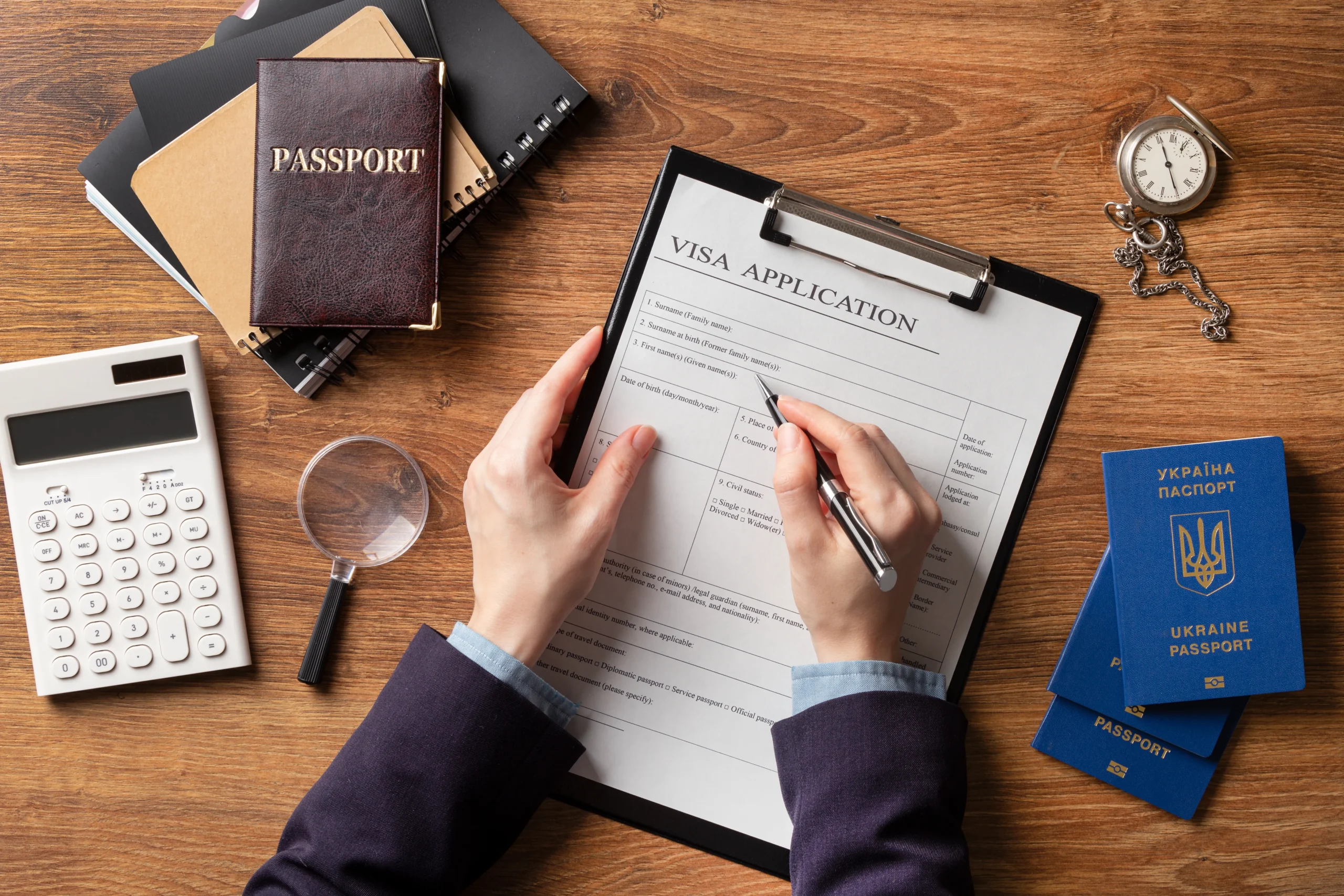
Every visa application tells a story through paperwork. Your birth certificate proves identity, your bank statements demonstrate financial stability, your employment letter confirms your professional status. But when these documents are not in the language of the country you are applying to, you need translations that immigration authorities will actually accept.
This guide covers what you need to know about document translation for visa applications — which documents require translation, what standards apply, and how to avoid common rejections.
Which Documents Need Translation?
The exact list depends on the visa type and destination country, but the following documents almost always require translation when they are not in the official language:
- Identity documents: Passport bio page, national ID card, birth certificate
- Civil status documents: Marriage certificate, divorce decree, death certificate of spouse
- Financial documents: Bank statements, tax returns, property deeds, employment contracts
- Educational documents: Diplomas, transcripts, professional certifications
- Legal documents: Police clearance certificates, court orders, custody agreements
- Medical documents: Vaccination records, medical examination results
What Makes a Translation Acceptable to Immigration?
This is where many applicants stumble. Immigration authorities do not accept just any translation. Most require what is known as a certified translation — a translation accompanied by a formal declaration from the translator or translation company attesting to its completeness and accuracy.
The specific requirements vary by country:
United Kingdom (UKVI): Translations must include the translator’s credentials, contact details, confirmation that it is an accurate translation, and the date.
United States (USCIS): The translator must certify they are competent to translate and that the translation is accurate. It does not need to be notarised unless specifically requested.
Canada (IRCC): Certified translation by a member of a provincial or territorial translators’ association, or accompanied by an affidavit.
Australia: Translations should be done by a NAATI-accredited translator.
Schengen/EU: Requirements vary by member state. Germany requires sworn translations; France requires translations by court-certified translators.
Top Reasons Visa Applications Get Rejected Due to Translation Issues
- Self-translated documents. Even if you are bilingual, immigration officers will reject translations done by the applicant themselves.
- Missing certification statement. The translation itself may be perfect, but without the formal certification declaration, it is considered incomplete.
- Partial translations. Every element on the original must be translated — including stamps, seals, handwritten notes, and margin annotations.
- Inconsistent names. If your name appears differently across documents due to transliteration variations, the translator must note this and maintain consistency.
- Outdated translations. Some authorities require translations to be recent. A translation done five years ago may be rejected even if the source document has not changed.
How to Get Your Documents Translated
The process is straightforward with modern online services:
- Scan or photograph all documents clearly
- Upload them to a certified translation platform
- Specify the target language and purpose (visa application)
- Receive a quote and estimated turnaround time
- Review the completed translation and certification
- Submit with your visa application
Timing Your Translations
Do not leave translations to the last week before your application deadline. Standard turnaround for certified translation is typically 2-5 business days for common documents, but complex legal files or large volumes may take longer. Factor in time for revisions — it is better to have translations ready a month early than to pay rush fees or risk errors.
A rejected visa application due to translation issues is not just frustrating — it can delay your plans by months. Getting this step right from the beginning is one of the simplest ways to strengthen your application.

