

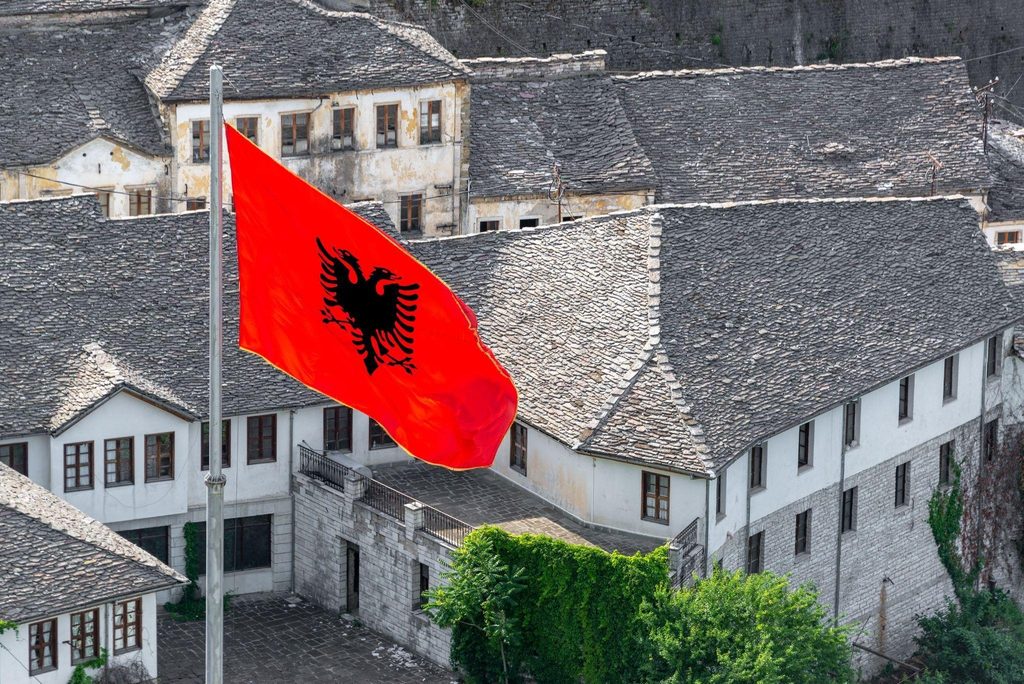
When our family of six finally touched down in Tirana in late May 2025, we pictured a straightforward adventure. My wife and I had mapped out a ten-day loop that mixed golden Ionian beaches, Ottoman hill towns, and quiet mountain passes.
Our four kids—aged twelve, ten, eight, and six—were packed with swim gear, hiking shoes, and enough snacks to survive a long flight. What we did not anticipate was how deeply our choice of transportation to explore Albania would shape the entire trip.
The roads branch quickly into valleys, the coastal highways twist without warning, and public transit follows its own quiet rhythm. Within the first 48 hours, we realized that moving a family of six across the country would be the real test. So we decided to test everything. We rode city buses, squeezed into shared minibuses, called taxis, tapped ride-hailing apps, and finally, on day four, rented a car.
This guide is the breakdown of what worked, what failed, and why booking a car rental with unlimited mileage became the single best decision of our holiday. If you are a foreign traveler planning a family trip to Albania, this piece of text will save you time, stress, and money.
The Family Reality: Why Albania’s Transport System Needs a Different Approach
Traveling with four children changes the math of every journey. You need predictable departure times, secure seating, space for backpacks and coolers, and a way to stop when someone needs the bathroom or a stretch.
Albania’s transport network was never designed with large families in mind. It works well for locals who know the schedules, travelers moving light, or couples who can squeeze into the back of a shared minibus.
But when you are managing twelve-year-old questions, an eight-year-old’s snack requests, a six-year-old’s sudden fatigue, and a trunk full of gear, you quickly learn that convenience and control matter more than saving a few euros.
We tested every option not to criticize Albania’s system, but to show foreign visitors exactly what to expect. The goal is simple: help you match your transport choice to your actual itinerary, group size, and travel style.
Option One: City Buses and Furgons – Cheap on Paper, Hard on Families
Albania does not run a metro, tram, or reliable passenger train. Daily movement depends on municipal buses inside cities and “furgons” (white or yellow minibuses) for intercity routes. Inside Tirana, the city buses are clean, modern, and cost forty lek per ride. We tried them on our first morning. The kids enjoyed the high seating view, and the route passed straight through Skanderbeg Square. But the system falls apart when you leave the capital or travel with a group.
We booked a furgon from Tirana to Berat the next day. The fare was under three euros per person, which sounded perfect. In reality, the vehicle was packed with twelve passengers, luggage was stacked in the aisle, seatbelts were either missing or broken, and the air conditioning struggled against the May heat. The driver stopped multiple times to pick up more riders, and the departure time shifted twice before we finally left.
For a solo backpacker, this is part of the local charm. For a family with four young kids, it was exhausting. Furgons run on loose schedules, rarely wait for latecomers, and stop running by early evening. Routes change without official notice, and information is shared through word of mouth or informal signs at local terminals.
If your plan involves only staying inside Tirana or taking one quick daytime hop to a nearby town, buses will work. But if you want to explore at your own pace, reach coastal coves, or visit multiple historic sites in one day, public transport simply cannot keep up.
Option Two: Taxis and Ride-Hailing Apps – Convenient in Cities, Limited Elsewhere
We quickly learned that Bolt dominates the ride-hailing space in Tirana, Durrës, Vlorë, and Sarandë. The app is easy to use, shows exact prices upfront, and removes the stress of negotiating with traditional taxi drivers. For short city trips, it worked beautifully.
We used Bolt to move from our hotel to the National History Museum, then to a family
dinner in the Blloku district. Fares ranged from three to seven euros, drivers were polite, and the cars were clean. But the moment we tried to use Bolt for longer trips or outside major towns, the cracks appeared.
Most Bolt vehicles seat a maximum of four passengers. We are six. That means booking two separate cars, paying double, and hoping both arrive at the same time. Drivers in smaller villages often do not accept app requests, and even in cities, surge pricing during evening hours or weekends can push fares past fifteen euros for a short hop.
More importantly, drivers will not wait while you explore a viewpoint, walk a beach trail, or let the kids finish lunch. If you book a ride to a remote coastal area, you will either pay extra for waiting time or risk being stranded when you are ready to leave.
Traditional taxis are everywhere, but you must insist on the meter or agree on a price before entering. Some drivers quote inflated rates to tourists, especially near hotels or ferry ports. Taxis and ride-hailing apps are excellent for airport transfers, late-night safety, or short city hops. They are not built for full-day family touring or reaching Albania’s quieter landscapes.
Option Three: Renting a Car – The Turning Point
On day four, after two days of missed connections, tired kids, and rising transport costs, we finally did what we should have done from the start. We rented a car. The difference was immediate and dramatic. We booked our car rental in Tirana online through Final Rentals, selected Tirana city center as our pickup point, and chose a Kia Stonic with unlimited mileage, full insurance, and a free child seat package. The entire process took twenty minutes.
If you are visiting Albania from another country, I recommend arranging your Tirana Airport Car Rental online before leaving home. Booking ahead can save time, reduce stress, and help you compare your options before arriving in Tirana.
The agent verified our licenses, walked us through the vehicle, confirmed the unlimited mileage policy, and handed over the keys. Our rate? Thirty-two euros a day in the shoulder season, with no hidden fees.
The Kia Stonic turned out to be the perfect family crossover for Albania. It sits higher than a standard sedan, giving the kids a clear view of the mountains and coastline. The rear seats comfortably fit three children with booster seats, while the twelve-year-old rode shotgun with us.
The boot swallowed two large suitcases, a cooler, beach chairs, and a daypack without forcing us to play luggage Tetris. Fuel consumption averaged around six liters per hundred kilometers, and with petrol costing roughly one point six five euros per liter, our weekly fill-ups stayed under forty-five euros.
The unlimited mileage meant we never worried about distance caps or extra charges when we decided to detour to a quiet bay or drive an extra hour to reach a mountain trailhead.
Why the Kia Stonic Worked for Our Family of Six
Compact SUVs and crossovers like the Stonic hit the sweet spot for Albanian roads. The country’s main highways are smooth and well-paved, but secondary routes to coastal villages, historic towns, and mountain passes often feature steep inclines, sharp bends, and occasional potholes. The Stonic’s ground clearance handled these sections without scraping, while the responsive steering made narrow village streets manageable.
The automatic transmission saved my wife from constant gear shifting in heavy coastal traffic, and the modern infotainment screen paired smoothly with our phones for navigation and kids’ playlists. Most companies cap daily kilometers and charge extra once you pass the limit. We drove over eight hundred kilometers in ten days without a single surcharge.
The full insurance waiver meant we could park in busy town centers without panic, and the free child seats were properly certified and securely installed. For a family of six, the daily cost split between my wife and me came to just sixteen euros each—less than what we would have paid for three Bolt rides in Tirana alone.
More importantly, we gained time. No schedules. No waiting. No surge fees. Just the freedom to follow a sign, stop for gelato, or change plans when the weather shifted.
Practical Tips and Point Suggestions for Foreign Families
Traveling with kids in a foreign country requires preparation. Here are the exact steps we followed, why they matter, and how they kept our trip smooth.
Book online three to seven days before arrival. Automatic vehicles and compact crossovers sell out fast during peak season, and airport counter rates are consistently thirty to fifty percent higher. Booking early locks in your preferred model and guarantees transparent pricing. This matters because walking up to a rental desk without a reservation often leaves you with expensive vans, manual-only sedans, or no availability at all.
Always choose full insurance coverage. Albanian roads are generally safe, but minor scratches from narrow parking spaces, stray livestock, or sudden lane changes can happen. Full coverage removes stress and prevents unexpected charges at drop-off. This matters because basic insurance often leaves you liable for tires, windshields, and undercarriage damage, which are common on rural roads.
Carry your passport and home driving license at all times. Police checkpoints are common on regional highways, and officers will ask for both documents. EU, UK, and US licenses are officially accepted for up to one year, but travelers from other regions must bring an International Driving Permit. This matters because driving without proper documentation can result in fines or vehicle impoundment.
Download offline Google Maps before leaving your hotel. Cellular signal drops quickly in mountain valleys, along parts of the southern coast, and near border areas. Offline navigation ensures you never lose your route when coverage fades. This matters because getting lost on a narrow mountain pass with four hungry kids is a quick way to turn a peaceful afternoon into a stressful ordeal.
Keep Albanian lek in cash. While cards work in Tirana and major coastal towns, small parking lots, rural guesthouses, roadside cafes, and village entry points often accept only cash. Having fifty to one hundred euros worth of lek on hand saves you from awkward moments. This matters because ATMs are sparse outside cities, and card terminals frequently experience connectivity issues in remote areas.
Pack or request proper child seats. Albanian law requires approved restraints for children under twelve or shorter than one hundred thirty-five centimeters. Final Rentals provides certified seats at no extra cost, but not all agencies guarantee availability. If you bring your own, verify they meet European safety standards. This matters because local enforcement is increasing, and traveling without proper seats puts your children at risk on winding roads.
Drive defensively and respect speed limits. Town limits are fifty kilometers per hour, rural roads cap at ninety, and highways allow up to one hundred thirty. Mountain passes require slow speeds, frequent honking on blind corners is normal, and livestock crossings are common at dawn and dusk. This matters because local driving culture is assertive, and unfamiliarity with mountain braking techniques or sudden animal crossings can lead to close calls.
Avoid night driving in rural areas. Street lighting is sparse outside cities, road markings fade on older sections, and local drivers use high beams frequently. Plan your long transfers for daylight hours to keep stress low and visibility high. This matters because navigating unfamiliar roads after dark with tired children significantly increases the risk of wrong turns or fatigue-related mistakes.
Frequently Asked Questions from Foreign Travelers
Do I need an International Driving Permit?
EU and UK licenses are legally accepted for short-term visits, but many rental companies still request an IDP to simplify insurance paperwork. Visitors from the US, Canada, Australia, or non-European countries must carry an IDP alongside their home license. Obtain it before departure, as it is not issued in Albania. Why this matters: rental agencies use the IDP to verify license authenticity and process full insurance claims faster if an incident occurs.
Are there toll roads in Albania?
Albania has very few toll sections. The main Tirana–Durrës highway and the new Thumanë–Kashar bypass are toll-free. Some older mountain passes charge small fees at maintenance checkpoints, usually under one euro, payable in cash. Why this matters: unlike neighboring countries, Albania’s highway network remains largely free, but keeping small change ensures smooth passage through rural checkpoints.
Is it safe to drive long distances with children in Albania?
Main routes are well-maintained and clearly signed in English and Albanian. Keep doors locked on highways, use rear window sunshades, plan bathroom stops every two hours, and avoid rushing through unfamiliar villages. Why this matters: consistent breaks, hydration, and sun protection prevent travel fatigue, which is the real safety risk on long family road trips.
Where is the best place to pick up a rental car?
Tirana International Airport offers the widest selection, transparent pricing, and immediate departure. City branches exist, but airport pickup saves transfer time and usually includes better vehicle options. Final Rentals operates directly in the arrivals hall, with no shuttle required. Why this matters: avoiding city-center pickups eliminates extra taxi costs, reduces initial stress after a long flight, and guarantees you start your trip on time.
What should I do if I get a flat tire or breakdown?
All reputable rental agencies provide twenty-four-hour roadside assistance. Save the rental company’s emergency number in your phone, pull over safely, turn on hazard lights, and wait for professional help rather than attempting repairs on narrow roads. Why this matters: Attempting roadside fixes on steep passes or busy highways puts your family at risk and may void your insurance coverage.
The Bottom Line
Albania’s magic does not live only in its capital or its most famous beaches. It hides in quiet olive groves, winding mountain passes, and coastal villages where time moves more slowly. Those places do not sit beside bus terminals or app pickup zones. If your goal is to experience Albania with your family, renting a car is not a luxury. It is the most practical, cost-effective, and stress-free way to move through the country.

