

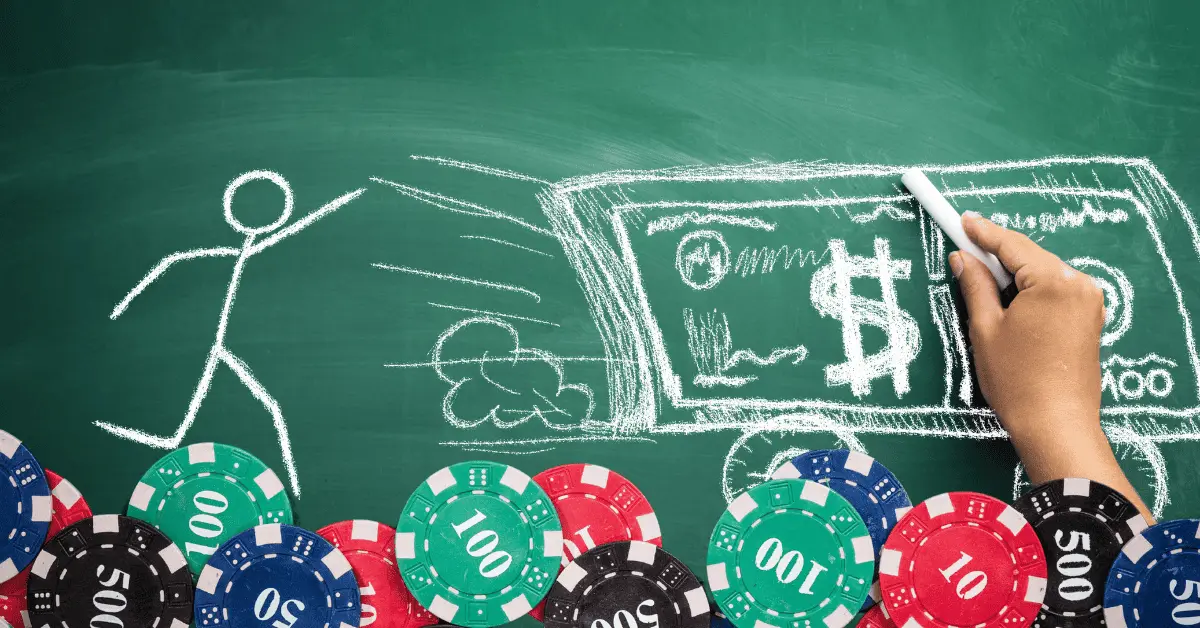
Chasing losses in slots looks like a way to “get even,” but in practice it compounds risk on top of already negative odds. Each attempt to recover past spins pushes more money into a game designed to return less than it takes, turning a manageable loss into a financial and psychological spiral. Understanding why this pattern is so dangerous requires looking at how slot math, human bias, and emotional reactions interact during losing streaks.
What “Chasing Losses” Really Means in Slot Play
Chasing losses is not just continuing to play after a bad run; it is specifically the decision to stake more than originally planned because previous spins lost money. The cause is the belief that a future spin will “fix” earlier damage, so the player raises bet sizes, extends session time, or dips into new funds. The outcome is that current decisions become anchored to past losses instead of current affordability, and the impact is that risk grows faster than the bankroll can sustain.
When this mindset takes hold, players stop evaluating each spin as an independent event and start treating the entire session as a mission to return to break-even. That shift causes tunnel vision, where the only acceptable result is recovering the deficit, regardless of how much extra money must be risked. Over time, the cumulative effect is that a single unlucky phase can wipe out far more funds than any one session was ever meant to involve.
Why Slot Math Makes Recovery Attempts So Costly
Slot machines operate with a house edge, meaning the expected return is always below 100% of the money wagered over the long term. The cause is built into the paytable and probabilities, not into streaks or moods, so every additional unit bet while chasing is also subject to that edge. The outcome is that “one more round” mathematically increases expected loss rather than recovery potential, even though emotionally it feels like another chance to get even.
Because each spin is independent, the machine does not know that the player is behind or “due.” Raising stakes after losses simply magnifies the size of each negative expectation. The impact is that chasing turns a modest, acceptable loss into a series of increasingly expensive bets, where the occasional win merely reduces the size of the deficit rather than solving it. In the long run, the arithmetic of the game is indifferent to whether the player is desperate or calm.
Psychological Traps That Fuel the Urge to Chase
Chasing losses is driven by predictable cognitive biases rather than pure rationality. One core cause is loss aversion: people feel the pain of losing more intensely than the pleasure of winning the same amount, so they push harder to remove that discomfort. The outcome is that protecting ego and avoiding regret start to outweigh safeguarding money, which makes riskier decisions feel justified. The impact is that players keep betting in order to escape an emotional state, not to make a sound financial choice.
Another trap is the gambler’s fallacy—the belief that a win is “due” after many losses. The brain searches for patterns in random sequences, interpreting a long losing streak as an imbalance that must correct. This misreading of randomness encourages larger bets at precisely the moment when the bankroll is weakest. The result is often a rapid acceleration toward ruin, even though the underlying probabilities have not changed at all.
How Chasing Disrupts Bankroll Management
Any budgeting system for slots—daily limits, session caps, or percentage-based stakes—depends on consistent behavior. Chasing losses breaks that consistency by rewriting rules mid-session: loss limits are raised, session budgets are ignored, and bet sizes exceed the planned percentage of the remaining bankroll. The cause is the emotional insistence that “today must end at break-even,” which overrides earlier planning. The outcome is that safeguards meant to protect the bankroll are dismantled exactly when they are most needed.
Once rules are broken for the sake of recovery, those rules lose authority in future sessions as well. A player who has successfully overridden limits once becomes more likely to do it again whenever results feel unfair. The long-term impact is that the bankroll plan stops functioning as a constraint and becomes a polite suggestion, undermined whenever loss-chasing impulses arise. At that point, mathematical strategies cannot compensate for inconsistent discipline.
Where UFABET Fits Into the Risk Equation
In multi-product betting environments, chasing rarely stays isolated within one game type. A player who has been losing on slots may feel tempted to shift into other options—live games, sports bets, or additional features—in an effort to recover. When all of these activities draw from a shared wallet, the damage done by chasing can spread quickly. Under conditions where the account structure shows consolidated balances and cross-game results in a single view, some users gain better insight into how fast losses accumulate across activities. Within that broader context, treating slot play as one controlled component of the day’s risk, and using transaction records in services including UFA747 to track how often “recovery attempts” appear, can reveal patterns that would otherwise remain hidden. Recognizing those patterns is often the first step toward interrupting the chase cycle before it consumes far more resources than any one session was supposed to involve.
The Emotional Consequences of a Chase Spiral
Chasing losses does not just affect numbers; it changes the emotional tone of gambling. The initial cause is the discomfort of being down, but as bets grow and losses deepen, that discomfort evolves into anxiety, shame, or anger. The outcome is that the player no longer experiences slots as entertainment but as a pressing problem needing urgent resolution. The impact is that even if a partial recovery occurs, the experience feels exhausting rather than enjoyable, and relationships, sleep, or work can start to suffer.
This emotional spiral often extends beyond the session itself. People may replay decisions in their mind, feel compelled to hide the extent of their losses, or plan risky “big comeback” sessions to undo the damage. These aftereffects show that chasing is not just about a few extra spins; it is about the psychological burden of refusing to accept a loss. Over time, that burden can be more corrosive than the financial hit that triggered it.
The Role of casino online Environments in Either Limiting or Amplifying Chasing
The structure of online gambling environments can either curb or fuel chasing behavior. When tools for setting deposit limits, loss caps, and time reminders are easy to configure and hard to change quickly, they act as speed bumps that slow down recovery attempts. By contrast, if additional deposits are only a few clicks away and session statistics are buried or unclear, the path from “one more spin” to substantial debt becomes shorter. In this context, evaluating a casino online context means looking beyond the games themselves and asking how the surrounding systems handle risk: do they highlight net results, encourage cooling-off periods, and prompt users to reconsider when losses mount, or do they prioritize frictionless reloading? The more frictions and safeguards exist, the harder it becomes for a chasing mindset to translate directly into uncontrolled spending.
Comparing Accepting a Loss vs. Chasing It Back
H3: Two Divergent Responses to the Same Losing Session
Imagine two players each down the same amount at the end of a slot session. The first decides that the loss is the cost of the day’s entertainment and stops, preserving the rest of the month’s bankroll. The cause here is acceptance: the player treats the outcome as an expected risk rather than an injustice. The outcome is emotional closure, and the impact is that future sessions remain funded and relatively stress-free.
The second player refuses to accept the loss and increases stakes in an attempt to erase it quickly. The cause is the conviction that quitting now would “lock in defeat.” The outcome is that bet size and session length expand beyond plan, tying more of the bankroll to a single bad run. The impact, even when a partial comeback occurs, is a highly volatile pattern where occasional salvaged sessions are overshadowed by large, sudden drawdowns. Both responses began from the same numeric position, but the long-term trajectories diverge sharply depending on whether the urge to chase is indulged or resisted.
When Chasing Becomes a Warning Sign, Not Just a Bad Habit
Occasional temptation to recover a bad day is normal, but persistent, intense chasing is often a symptom of deeper difficulty with control. The cause may be underlying stress, financial pressure, or a developing gambling problem that uses recovery as justification for continued play. The outcome is that sessions stop being optional leisure and instead become perceived necessities for “fixing” money issues created by earlier gambling. The impact is a feedback loop where each attempt at repair produces more damage, both financially and emotionally.
Recognizing this point is critical. When a player finds themselves repeatedly breaking limits, hiding losses, or feeling unable to stop until they are even, the question shifts from “How do I chase more safely?” to “Should I be chasing at all?” At that stage, external support, strict self-exclusion tools, or professional help can be more effective than any adjustment in stakes or strategy. Chasing is dangerous not only because of the extra money it risks, but because it can reveal that gambling has moved beyond entertainment into compulsion.
Summary
Chasing losses in slots is more dangerous than it appears because it stacks emotional urgency on top of mathematically unfavorable odds. The attempt to “get even” causes players to abandon bankroll plans, raise stakes, and extend sessions, which in turn accelerates both financial losses and psychological strain. Understanding how slot math, cognitive bias, and digital environments interact around chasing gives players a clearer choice: accept manageable losses within pre-set limits, or let the urge to recover drive decisions that quietly turn a pastime into a serious problem.

